

Before I give you the official “tour” of Kam Wah Chung, I thought I’d share some of the many photos I took of the place. This photo essay post will be bookended between last week’s post about my workamping experience at Kam Wah Chung and the tour itself.
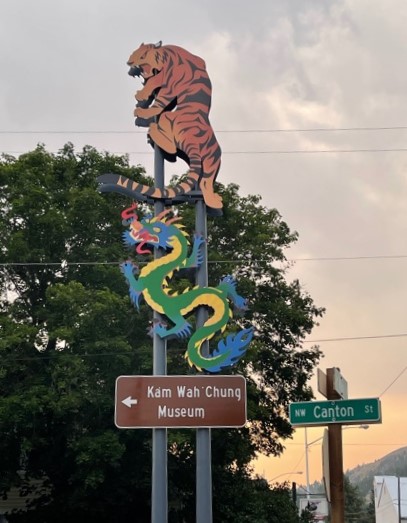
Sign on the main street of John Day to Kam Wah Chung. Back in the day, Chinatown was sometimes referred to as Tiger Town. Hence, the tiger at the top.
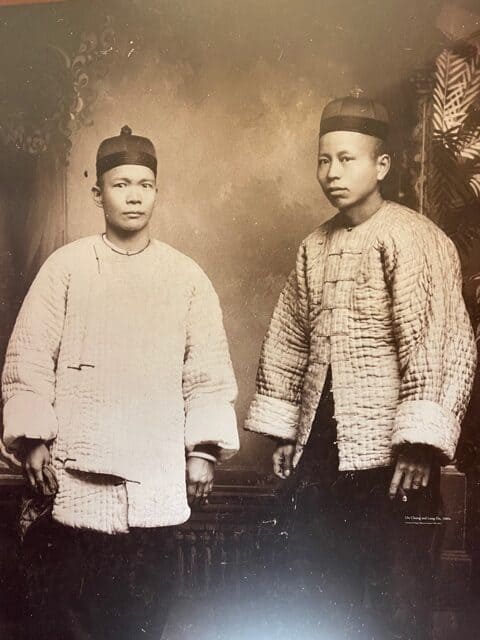
Lung On and Ing “Doc” Hay, owners of Kam Wah Chung as young men. Friends and business partners from 1888 when they purchased Kam Wah Chung until Lung On’s death in 1940. Doc Hay died in 1952.
The Main Room
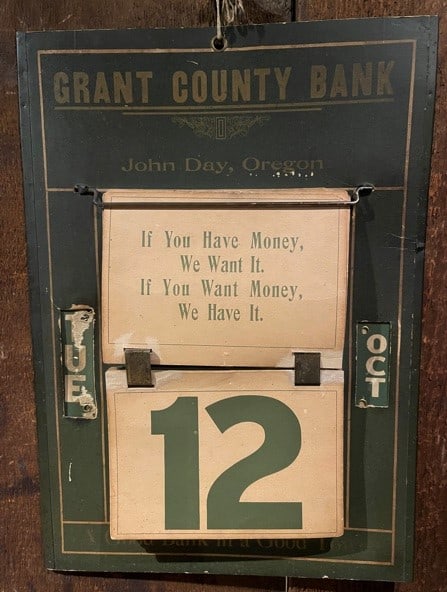
Found among the things left behind at Kam Wah Chung were years and years of calendars. Several are on display in the main room of the building. This one often caught visitors’ attention because it’s both fun and funny. “If you have money, we want it. If you want money, we have it.”
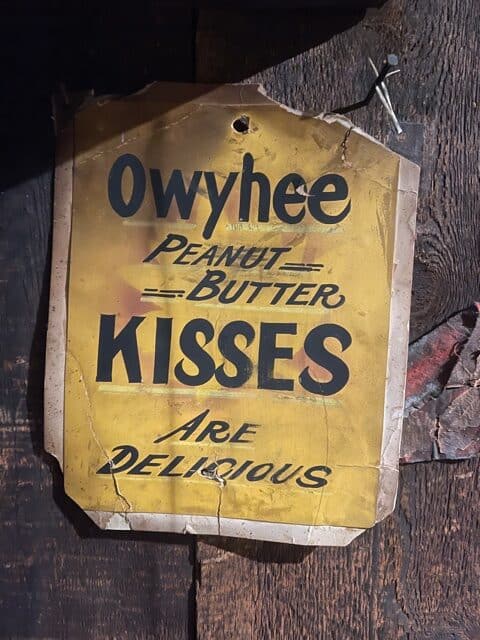
The candy, manufactured by the Idaho Candy Company in Boise, Idaho, was a favorite of the two men. The company is still in business today producing Idaho Spuds Bar and the Cherry Cocktail Bar.
The General Store
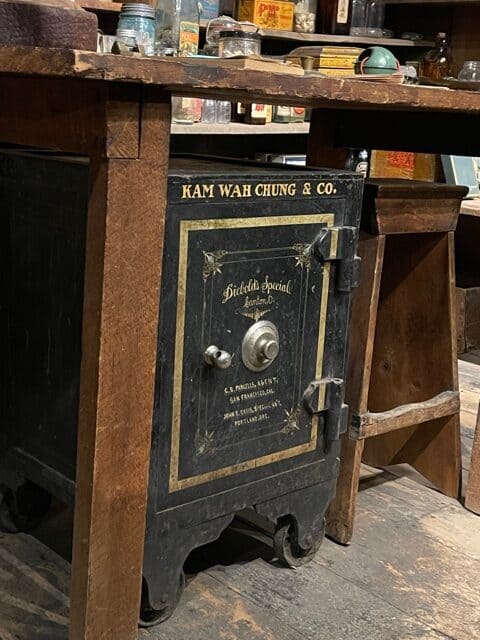
Unfortunately, the safe was found with a hole in the bottom. Whatever was in there has been lost to time. It’s fun to think what contents the safe held.
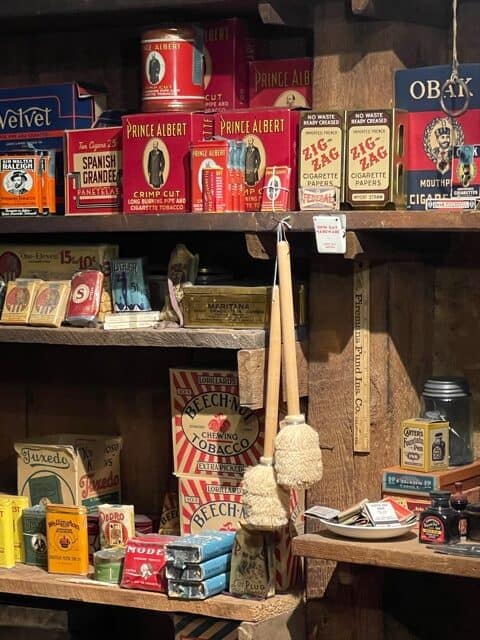
The general store part of Kam Wah Chung sold lots of alcohol and tobacco products, just like stores today. Theses were found full and unopened. Look close and you’ll see some brands still around today.
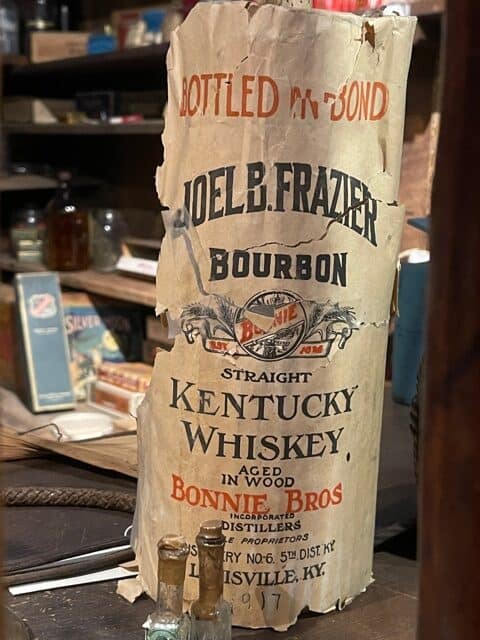
Almost 100 bottles of bootleg whiskey from the prohibition era was found in the two hidey-holes within the general store as well as other places. Unfortunately, many of the found bottles were given away or simply disappeared. Today, Kam Wah Chung has 33 bottles. Someone from the Kentucky Bourbon Society visited and assessed a single bottle at $10,000. No doubt, it would be nice to have those gifted and missing bottles back.
The Apothecary
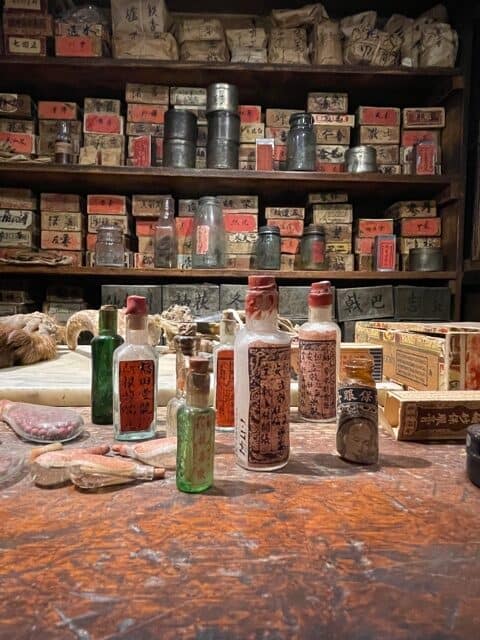
Inside Doc Hay’s apothecary. While animal parts he sourced locally (including a rattlesnake in one of the jars on the lower back shelf), most of the 500 herbs and other ingredients for his healing mixtures came from China. He would order them in larger bags and then put them in empty cigar boxes (on the shelves). The glass vials came from China with medicine already in them.
The Kitchen at Kam Wah Chung
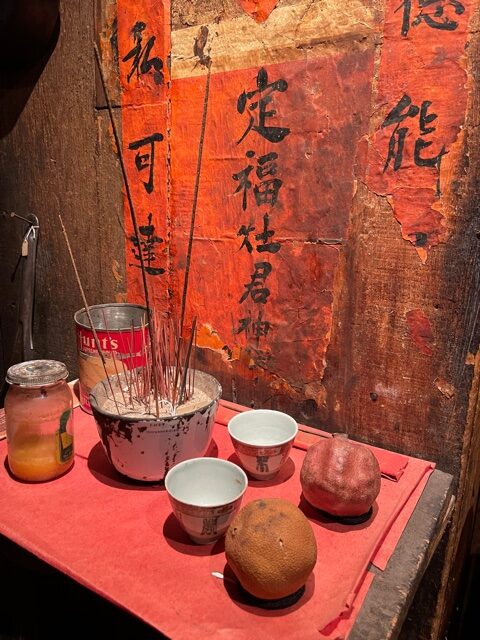
One of three altars in the building. This is in the kitchen. The pomegranate and the grapefruit are preserved from when Doc Hay left them there before he left to recuperate from a fall he took in 1948. Little did he know, he would never return to the place he called home for 60 years. He died four years later in Portland.
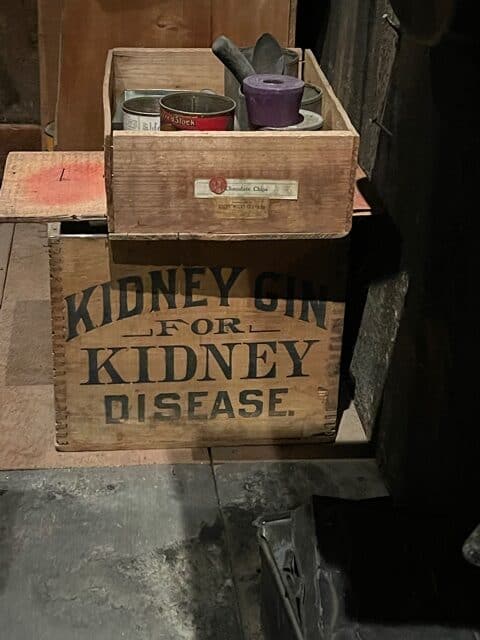
This box is tucked behind the stove but I always pointed it out to the visitors because it cracked me up. Kidney gin for kidney disease.
At the Interpretive Center / Visitors’ Center
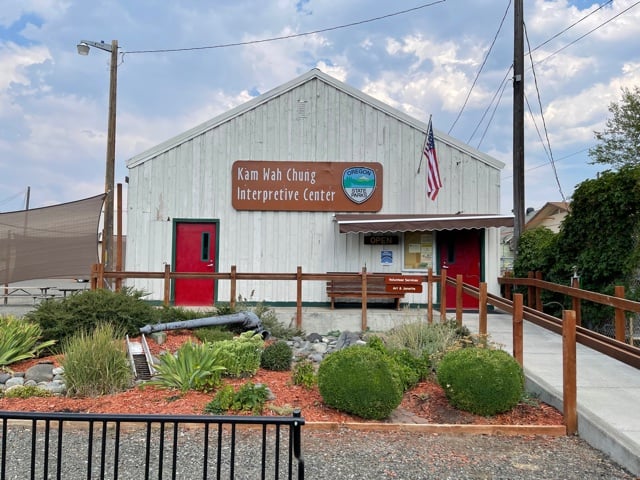
The Interpretive Center is where the tours began. Then we’d walk the visitors over to the Kam Wah Chung building about a block away. Visitors are not allowed in Kam Wah Chung except as part of a tour group.
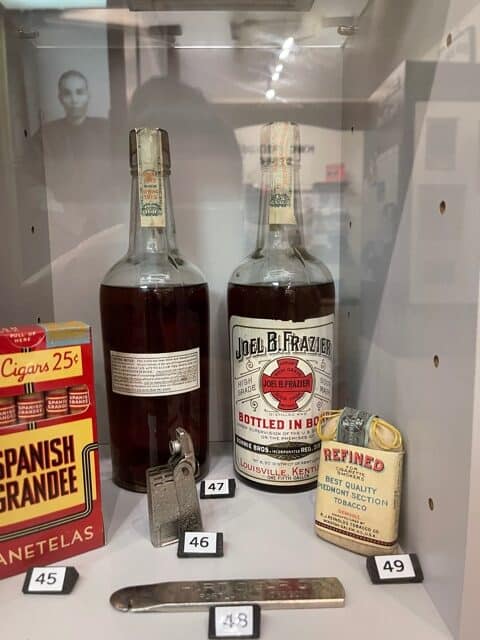
More examples of the found bootleg whiskey. These were from about 1913, found sealed and unopened.
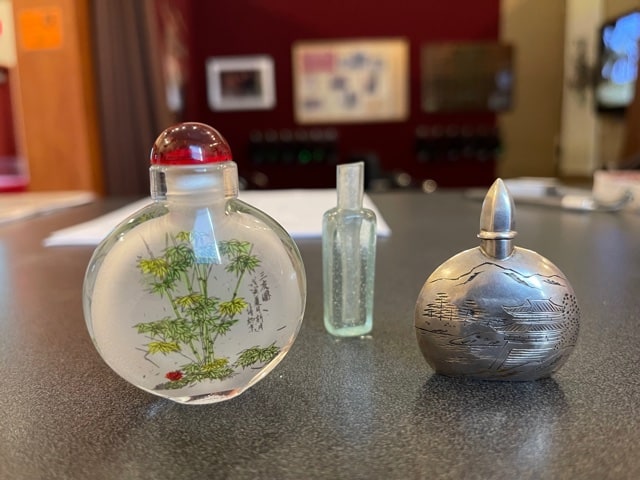
Bottles that local residents have found in their gardens and yards over time. From right to left is a snuff bottle, a medicine bottle and a perfume bottle (you can still smell a hint of the scent it once held).
No matter how many photos I share, nothing gives you the experience of the place like going there. Inside Kam Wah Chung, you can visualize the lives of the two men who owned it and the hundreds, maybe thousands, who passed through during the six decades they were in business. You can smell the place, see the grain of the wood.
So, if you are in or near John Day, Oregon, do stop in for a tour (every hour on the hour, seven days a week) at this special place called Kam Wah Chung.
Links to Relevant Posts:
To see products recently purchased by readers or to browse and shop at Amazon, follow either of these links. Huge thanks for your support.
- Energy Wise RV Skylight Insulator
- LastRound Reusable Cotton Rounds
- Fotbor for Kindle Fire Fast Charger
- ScorchedEarth Microfiber Travel & Sports Towel Set
- Whitmor Folding White Spacemaker Drying Rack
- Petsfit Most Airline Approved Solid Expandable Soft-Sided Carrier for Pets up to 15 Pounds
Affiliate Link Disclosure. As a result of being an Amazon Affiliate, I earn from qualifying purchases.




Thank you for the photo your. I really enjoyed it!
Thanks, Catherine. It is a fun place and when I do the “tour” post, it will include more photos. Hope you are well.
What a wonderful place you have found for yourself. I am happy you are going back next year. Have a peaceful week. Love, Marie
Thanks, Marie. I’m actually not going back to Kam Wah Chung next year but I am going back to the Sumpter Dredge. They aren’t too far apart (about an hour) so I’ll likely stop in and say hello at my old stomping ground.
This is interesting. If I’m in the area, I’ll be sure to visit.
Definitely do, it’s worth the time. It’s such a treasure. Thank you, Carol.