
Today, I wanted to revisit an early article to see if my thinking is the same. I wrote this article when I’d been on the road for just six months, so I still really had no idea what I was doing. Like when I revisited What I’ll Miss About Sticks-and-Bricks life, I’ll put my new thoughts and updates in purple. It has been fun reviewing the older posts to remember how I felt and what I thought throughout the process of researching and preparing to be a full-time RVers. And the post today is a revisit of ideas I had about work I wanted to try on the road.
Thoughts About Money
The people I’ve told about moving to an RV life have been enthusiastic and admittedly jealous of the life I created. No work, just travel. But a few people have questioned whether it was a good idea. Or a smart idea.
I’m not bothered by the naysayers, believing that the response is a reflection of a conflict inside of them, rather than genuine concern for me. But I also don’t entirely poo-poo their question. Candidly, I acknowledge that, from a financial point of view I couldn’t have made a worse decision.
I traded a house that should appreciate for a trailer and a van that have already started depreciating. I traded a secure well-paying job I enjoyed for the belief that I will figure out a way to earn a living on the road. The list is long. I traded employer-paid health insurance and retirement contributions. Then I gave up long-established relationships with doctors, dentists, vets, plumbers and mechanics. I traded my favorite pizza place and knowing where to find almond milk creamer in the grocery store. In other words, I traded a world of security and the known for a world of the unknown and no security.
And it has been one of the best things I’ve ever done.
I still feel exactly the same way and I’m so happy in the decision I made. I love traveling to new places, seeing and doing things I never would’ve otherwise seen and done, and meeting so many great people along the way. Now, though, three years in, I sometimes find a bit of doubt and fear creep in. More than I did at the beginning. But that is fear and uncertainty.
Show Me the Money
Don’t get me wrong, I know the money will run out. I’m not the proverbial ostrich with my head stuck in the sand. The plan has been to not work for the first couple years on the road while I concentrated on writing. Carving out more writing time was the impetus for changing my life to begin with.
Even with that plan, I calculated that doing small short-term jobs along the way could stretch my two years. Maybe into three. Maybe more. Today’s list is some of those short-term jobs I intend to try on the road.
It’s interesting, in a big way, my plan ended up very different from my reality. I truly didn’t intend to work at all the first two years except maybe little things like those listed below. The reality was that I saw a job announcement four months after I got on the road that appealed to me so much I applied. And got it. I’ve talked about it before. I’m a Host Recruiter for the Harvest Hosts program, a program I use and love.
So that lessens my writing and adventure time each week but it provides me with enough income most months to cover my campground fees and food (two of my biggest expenses). It’s been great for me. The big bonus is the flexibility it allows me so the other work I want to try is also doable.
Work That Doesn’t Pay Cash
Work that doesn’t pay, you might think, is volunteering. But it isn’t exactly when you get something in return that has monetary value. You have to think of working outside of the traditional context. As an RVer, the kind of work that doesn’t pay cash will usually come with a free campground site that you would otherwise pay $500+ for. This type of work is often referred to as workamping.
If you want to figure out what you are “paid” in dollars, take the value of the campground site and other perks or benefits of the gig and divide it by the number of hours you are expected to work. The math can help in deciding whether or not to take it. This might be especially true for a gig you are less than enthusiastic about.
Still, the truth is that it is likely the value of your time will be less than minimum wage. I’ve done a handful of calculations, and the value of most jobs seem to range from $3 to $10 an hour.
Workamping gigs are highly varied. Everything from taking admission fees at an amusement park to maintenance work on hiking trails. And the companies and government entities you’d work for are equally varied. Just because one work assignment doesn’t appeal to you, doesn’t mean there isn’t something out there for you.
For me, the biggest factor would be the actual campsite. If it’s in a location I just love or want to explore, I’d probably be willing to work I’m not excited about or an exchange rate that is pretty small. On the other hand, if the job really attracted me, I would be willing to accept a less than stellar campsite.
Although I am open to any type of work, there are two workamping situations on my “must try” list.
Camp Host
A camp host is the person who keeps an eye on the campground. Depending the campground, the host might also sell ice and firewood, clean bathrooms, do basic grounds maintenance, pick up trash and make sure campers paid their fee. You might also have to babysit some campers, like telling them to keep the noise down.
I got less keen on the idea of being a camp host when I acknowledged that I really didn’t love the idea of cleaning bathrooms (especially after seeing how others leave them) or babysitting adults.
Even so, I have applied for several at campgrounds in Oregon that I was pretty sure I’d love. No doubt, I’ll apply for more in the future as none have come through so far. Most of the campgrounds in Oregon, if you were allowed to stay a month, would run you $900+ so I find the exchange for my time a good value.
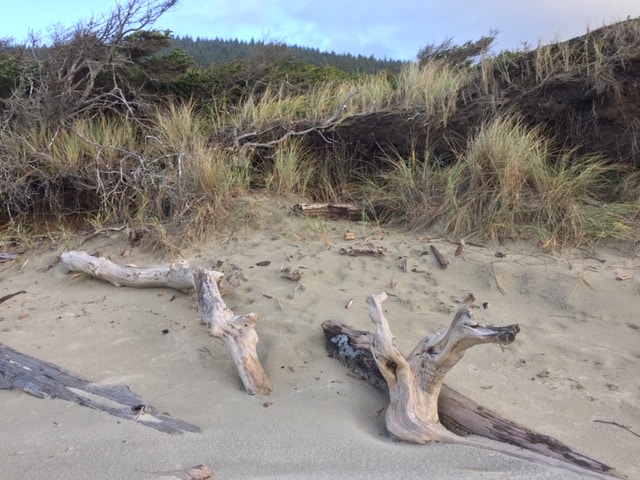
The feature image is from the beach a short walk from where Quill was parked at Carl G. Washburne State Park while I worked as an Interpretive Guide at Heceta Head Lighthouse. Camp Hosts got similar spots though theirs was closest to the entrance.
Tour Guide or Interpretive Guide
A tour guide or interpretive guide is a job I’m itching to do. The opportunities for both are broad. Specifically, I want to work as a tour guide at one of the many lighthouses along the west coast. And I want to work at a nature center or wilderness preserve where I’d probably do anything they needed but I really want to try being an interpretive guide.
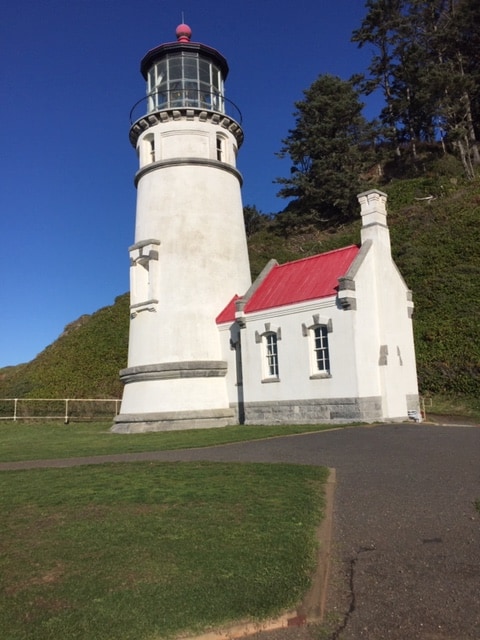
If you’ve been reading this blog for a while, you know I have checked this type of workamping off my list as I was an Interpretive Guide at Heceta Head Lighthouse on the Oregon coast. It was my first workamping experience. And I love, love, loved the experience! I’d planned on a second interpretive assignment at a historical site but COVID caused it to be cancelled.
When I originally wrote the post, I didn’t know enough about the available opportunities so I’d add here that other things I’d like to do within the realm of workamping is working at a Visitors’ Center and/or a gift shop. Many of the larger recreational areas will have one or both.
Work for Cash
This category is pretty clear. It’s an hourly-wage job where you exchange time for money. This work will never come close to the hourly-equivalent I was making as a full-time professional. It’s nearly all minimum wage (or close to it) work. However, it also pays overtime. So one can make several thousand dollars during these long-day, short-term work assignments. Most RVers find the payoff well worth it. Hard work for a couple months in exchange for the next months without needing to work.
I have three such jobs I’d like to try. If you have interest in the RV life, you will likely have heard of the first two. They are extremely popular among RVers. I may have to wait until I’m not a dog mom to try these because the long work days would not be agreeable to my pets, but the jobs remain on the list.
Well…I’m no longer a dog mom so the possibility now exists for me to try them.
Amazon CamperForce
Amazon hires RVers in droves for the holidays to help keep up with fulfillment demand. They even have a name: Amazon CamperForce. Their guidelines shift each year as needed but most years, campers work 12-hour days 5 days a week with an optional sixth day. You have to be able to lift 50 pounds and walk 10-12 miles a day. That’s 15,000 to 25,000 steps per day, according to my RV friends who have done it the last two years.
No doubt it is hard on the body, and maybe numbing to the mind, but people say you get used to it. You have to look up guidelines for locations and the number of hours you can expect because they differ year to year. In addition to pay (and those hours including overtime add up fast), you get a free campsite and a completion bonus. I assume the completion bonus speaks to how many people end up quitting before the last day. The last day is always just before Christmas, usually December 22 or 23.
In the past, you could start as early as September or as late as mid-November. It would be hard, but it also might be a kick. I want to try it, but already know that I’ll be signing up for the mid-November start date. I’ll try six weeks of torture before I sign up for three months of it.
A few things that I know are different now from when I wrote this. (And, there’s a good chance will be different again in a couple years.) Amazon no longer pays for campgrounds. Instead, they will pay up to $550 per month at the campground. I think this is kind of lame because some campground near their fulfillment sites can be up to $800. It speaks to choosing your preferred fulfillment center with care.
The second change I noticed this year is that there were only two possible start dates. Mid-October or mid-November. I can understand why they did this. It means only two new employee orientations, instead of doing them weekly for eight or so weeks.
You might wonder how I know this new information. Well, I looked at it in 2020 as I think I’m going to apply to do it in 2021. I’ll keep you updated as I go through the process.
If you want to read a little more that it, click HERE. There is also a one-minute video that give you the highlights.
Sugar Beet Harvest Work
Most people believe that the sugar we use in the US comes from sugar cane. It doesn’t. It comes primarily from a vegetable. The sugar beet. And, believe it or not, it is harvested in the US in a single month. The month of October. In ideal conditions everything will be harvested in about 12 days, but for planning purposes RVers assume they will work for the full m month because many days aren’t ideal conditions.

Harvesting ceases if the weather is too wet, cold or hot. The work day is long and, often, it is very dirty work. After all, the sugar beet is a root vegetable. Like with Amazon, in addition to pay (with overtime because shifts are 12 hours long), RVers get a campsite. And, like Amazon, the work is far from glamorous but there is something about it that feels like an RVer’s rite of passage to me. Many RVers work the sugar beet harvest, then move to Amazon for the remainder of the season.
If you want to read more about the sugar beet work, go HERE.
Seasonal Retail Work
Seasonal retail work. I’d love to work in a book store or a cooking store (like William Sonoma). Many such places hire seasonal workers to help with holiday shopping during November and December. These places don’t offer campsites since they aren’t specifically trying to tap into the RVing community for staff. But if I found a town I loved, it seems like it would be fun to stay a couple months and get the chance to put a few dollars in the coffers.
I have to admit, after writing this I haven’t given retail work another thought. I even forgot about it until reviewing this post. Hmm, it still appeals to me so it might be a future adventure.
What About You?
If you are an RVer, do you have work on the road you’d like to try or have tried? Would love to hear about your experience.
Links to Relevant Posts:
To see products recently purchased by readers or to browse and shop at Amazon, follow either of these links. Huge thanks for your support.
- LudoPam T Level, 2 Way T-type Cross Check Bubble Level
- WD-40 Specialist Dirt & Dust Resistant Dry Lube
- Star brite White Lithium Grease Spray
- Wilson Juniors Complete Golf Set
- KN95 Face Mask 50 Pack
Affiliate Link Disclosure. As a result of being an Amazon Affiliate, I earn from qualifying purchases.


Good morning Debbie,
I’ve been reading your posts almost from the beginning I think and enjoy them. You cover a variety of topics that are well written.
I look forward them each Monday morning.
Randy
Randy! You made my day. Thank you so much for the kind words. I love making Mondays a good day for others.
What great ideas! I would definitely do the sugar cane job! I would hope that i would be so sick of sugar by the end of the job that I would never eat it again! (serious)
Wear sunscreen Deb!
Camp host might be fun until i have to tell someone to tame it down a bit. lol
Okay, so I can watch your dog while you go to work. Another job idea!
It’s the one thing i worry about is running out of money. My one fall back will be a SS check per month. My retirement day is 1/20/2020!
I’m getting antsy! Really looking at RV’s right now! Why wait! But I will only pay cash and I’m nervous about buying used. My thought is to get something that will let me know if i really want to do this full time. I have 4 weeks off during the summer and many long weekends, spring break, fall break, Thanksgiving break, Christmas break. too many to mention.
As always, i enjoy reading your posts!
Have fun and be blessed!
Becky in INDY
Thank you Becky. I’m so excited for you Now that you have a exact date, you really are counting down the days. I remember that feeling–feeling like it couldn’t get here fast enough and at the same time it was going by too fast because there was so much to do. With the camp host, that’s the part I wouldn’t like too much either. I don’t like babysitting adults. I’m keeping my eye out for a camp hosting jobs where I sell ice, firewood and greet everyone. Hmm…not sure there is one that is only those things but I’ll keep my eye out. You never know.
I loved my holiday job at Breed & Co., in Austin, TX. The very best Ace Hardware store that has a full housewares Dept complete with wedding planner.
It was fun and exhausting 7 hours on your feet and going up and down stairs to get inventory. $13 per hour.
I remember you saying you enjoyed it. Until I learned it from you, I never knew Ace Hardware was much more than just hardware. Maybe, when the time comes, I’ll look into that as a possibility too. And seven hours would be easier (though not easy) than 12.
Many ACE hardwares live up to their “helpful hardware [person]” jingle that we have seen. As a Workamper News subscriber, I am also keeping the contact and add info for the potential opportunities I would persue when in a certain area. Since there are so many more jobs than people to fill them, I know there will always be a way to make money when traveling. Enjoy!
That’s so good to know. Maybe one day we’ll end up at the same work camper job site. Wouldn’t that be fun?
I would enjoy working during the summertime at all the state and national parks throughout the USA. Working at different lighthouses would also be fun. It would be even more fun to live in one. Love, Marie
Yeah, living in a lighthouse would be a kick. The National Parks use a lot of work campers so I might end up at one of those. You never know.
Hi Debbie,
I suppose you attended the big shindig last night and feasted on Oliver’s dinner. It was good. I was up at 4:30 this morning and saw you card lying on my table so went to your blog and read this first posting about your looking for work. Very interesting! Well, Deb, I’ll tell you one thing, you got guts. Takes a lot of courage to leave all those secure things you mentioned and hit the road. I hope you soon find a roadie job you like. I’m going to keep reading your blog as it’s interesting to me and since I’ve met you and seen your outfit (camper and van) makes me even more curious how you will hold it all together. OK, gotta get going as Dory is sleeping and must wake her and start packing for the trip back to Illinois. Wishing you the best!
It sounds like it worked out perfect that someone left my card behind. I enjoyed the entire rally. Thank you for your kind words. It really isn’t in my nature to be brave, so taking this leap is definitely out of my character and out of my comfort zone. But I sure am happy I did it. Safe travels back home. I hope to meet you on the road again in the future.
So glad we were finally able to meet you!! Thank you so much for the van tour!! Definitely something for us to explore further!!
We have done campground hosting and loved it. We also volunteered at wildlife refuges (same concept as hosting) and really enjoyed that tremendously!! We know many full-timers that actually move around the country going from refuge to refuge! We also know many that have done the Amazon gig. Home Depot also hires seasonals and their pay is pretty good!! Good luck and enjoy Lake Guntersville! We are at Oak Mountain tonight and have an awesome site!!
Was happy to show you the van. Will anxiously wait to hear what you guys end up deciding. The wildlife refuge seems like it would be fun and educational. Plus you’d be in beautiful natural spot. I hadn’t heard about Home Depot. It’s now on the list of possibilities. It was so wonderful meeting you two. I know we’ll see each again soon.
Dear Debbie, I love your website!! I hope to be hitting the road before much longer. I just had knee replacement surgery, so on my right side I am a completely 21 yers old!! LOL. But, on the left side I am just a 74 year old female. By the way, I sent the black dining room table to people that live in Pa. So that worked out good. Maybe one of these days I will meet up with you again. Love, Nan Wallace
Glad to hear the table top found a home. You are doing so great and I’m so happy and proud that you decided to get out on the road. Yes, we must cross paths again in the future. Happy Holidays, Nan.
https://road2reinvention.net/2020/11/16/kiptopeke-to-myrtle-beach/
Campground hosting has been a huge plus in the year of the virus.
Glad you are enjoying your hosting gig. I think working in a Visitors’ Center or a gift shop would be fun. Finding a place that didn’t shut down and then not to have to pay the fees in exchange for the work is a plus in this hard time. Your experience with the seasonal work at the hardware / cooking store is what gave me the idea to add seasonal work to the list. It sounded like such fun.
Debbie,
One of your best!
Enjoyed your comments – the subjects were on point.
Keep it up.
RB
That’s so nice of you to say. Thanks, Russell!
Fun to see you get so much adventure out of your decision to RV. Has it been more difficult to get jobs since COVID?
Hi Laura, Yeah definitely harder. My job as a recruiter for Harvest Hosts meant I reached less than half of my goal for the year because so many businesses were closed so I couldn’t reach out to them. Then my two month workamping assessment in Oregon was cancelled. It’s been tough but I certainly know that lots of people have it far worse. Here’s hoping things start turning around when we change our calendars to 2021.